
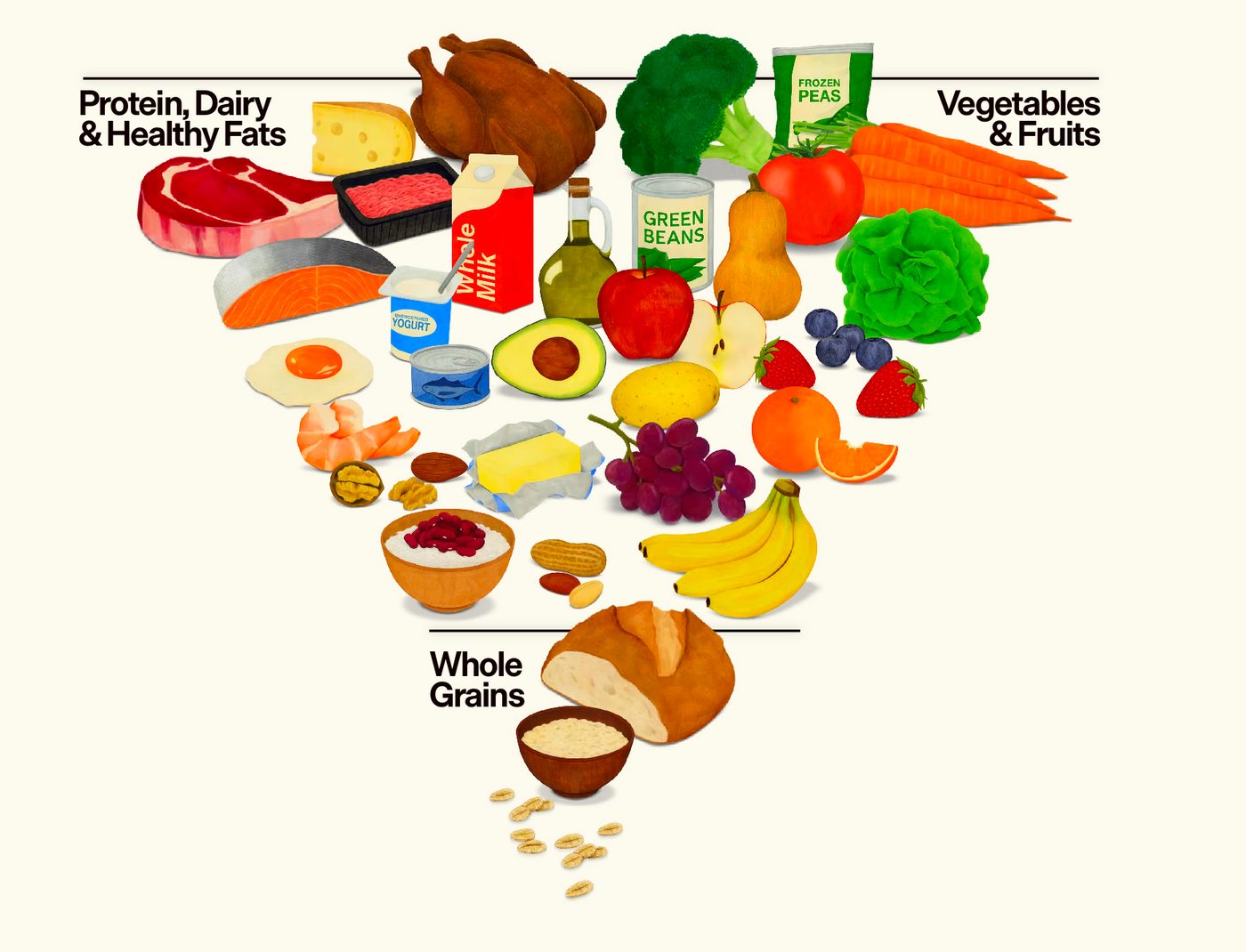
There has been a release of new dietary guidelines in America that encourage a shift back towards optimal health and a reduction of chronic disease rates. A majority of chronic disease in America is attributed to dietary and lifestyle factors, meaning it is preventable. Currently over 90% of the federal healthcare budget is allotted to the management of these chronic diseases.
The reinvention of the food pyramid is a huge step towards promoting a decrease in these astronomically high chronic disease rates, and we are all for these much needed updates.
Here’s a breakdown of what these changes are, how you can implement them, and the tangible benefits these changes will have on your health.
What exactly are the changes to the food pyramid?
At the core of these changes is a pairing back to the basics of health, re-prioritizing nutrient-dense lower carbohydrate foods and minimizing processed and carbohydrate-heavy foods.
The new pyramid emphasises that high-quality protein (including both animal and plant-based sources), healthy fats, a wide variety of vegetables with a multitude of different colors, and fruits, should be the core of your diet. While strongly recommending a significant reduction of refined carbohydrates, which most often displace nutrient-dense foods in the average American diet.
Additionally, it is recommended to significantly minimise foods that are proinflammatory, including added sugars, industrial oils, and artificial additives present in many processed foods, in favour of minimally processed and nutrient dense options.
How to implement these new dietary guidelines
So, what do these new recommendations look like in everyday life?
At the core, these recommendations mean reducing processed and packaged foods as much as possible, while incorporating more whole foods. They also mean changing the composition of your plate to favor nutrient-dense foods that support optimal health, naturally displacing packaged foods.
The new guidelines recommend the largest half of your plate be filled with high-quality protein from both plant-based and animal sources, and healthy fats, closely followed by a wide variety of vegetables and a small serving of fruit. Lastly, minimising grains and keeping them unrefined.
Recommended high-quality protein & healthy fat sources:
It is recommended to aim for 1.2-1.6 grams of protein per kg of bodyweight a day. If you’re over 40 or a postmenopausal woman we recommend aiming for the higher end of this.
- High-quality animal protein sources:
- 100% grass-fed, hormone and antibiotic red meat
- Pasture raised, hormone and antibiotic free chicken
- Wild caught fish, especially small fish to limit mercury exposure
- Pasture-raised, hormone and antibiotic free eggs
- Opt for whole-fat dairy products over low-fat dairy products
- Plant-based protein sources:
- A variety of beans and legumes including things like lentils, white beans, black beans, chickpeas, and kidney beans
- Nutritional yeast
- Green peas
- Hemp seeds
- Chia seeds
- Spirulina
- Avocado
- Extra virgin olive oil, ideally in a dark glass bottle or tin
- Nuts & seeds
- Olives
Five servings of vegetables and two servings of fruit (includes, but not limited to):
- Brocoli
- Carrots
- Purple sweet potato
- Cauliflower
- Green beans
- Zucchini
- Eggplant
- Kale, spinach, and lettuce
- Tomatoes inc cherry tomatoes
- Pumpkin / squash
- Brown button mushrooms, king oyster, and enoki mushrooms
- Peppers/capsicum
- Okra
- Asparagus
- Beetroot
- Celery
- Onion (inc brown onion, red onion, spring onion, and leek) & garlic
- Fruit
- All berries
- Citrus fruits
- Apples and pears
- Peaches and nectarines
- Grapes
Small amounts of unrefined grains if desired:
- Rice
- Oats
Hydration
As for hydration, it is recommended to hydrate well with water and unsweetened beverages, however a specific fl oz is not provided. We recommend aiming for 105 fl oz a day with electrolytes once a day, and starting your day with 17-24 fl oz to replenish mild dehydration that occurs overnight.
Cooking Methods
Additionally, the guidelines recommend certain cooking methods over others, specifically, "swap deep-fried cooking methods with baked, broiled, roasted, stir-fried, or grilled cooking methods.” This recommendation is likely largely due to the fat that deep frying is done in industrial seed oils which are pro-inflamatory and the new guidelines directly recommend avoiding consumption on. This recommendation flips the old suggestion of these oils being “heart healthy” on their head. Instead, opt for extra virgin olive oil or avocado oil, or unrefined coconut oil.
Lunch & Dinner Ideas
To see these recommendations translated into meals, we've put together a few of our favorite recipes that align with these new guidelines:
- Egg Roll In a Bowl
- Salmon Salad Wraps
- One Pot Lemon Pasta - use a gluten-free legume pasta, keeps it grain-free and provides a good source of plant-based protein
- Pesto Steak Salad
Benefits of Adopting the New Dietary Guidelines
Implementing these revised dietary guidelines has significant health advantages, most notably by shifting the focus away from processed and packaged foods and toward nutrient-dense options. Specifically, the reduction in refined and processed carbohydrates can greatly improve insulin sensitivity, a key factor in preventing and managing various chronic diseases and dysfunctions.
By focusing on high quality protein, healthy fats, and a large variety of vegetables, these guidelines naturally lead to reduced inflammation, corrected nutrient deficiencies, and increased energy levels, ultimately enhancing longevity and quality of life. For individuals who are overweight or obese, this approach supports the development of metabolic flexibility and aids in weight loss. Furthermore, those with chronic conditions will more than likely see an improvement in symptoms or better disease management over time with consistent adherence.
The core values behind these guidelines are a heart of what we practice at Functional Labs, sharing the United States’ vision of rebuilding national health and reducing chronic disease incidence and impact.
You can find the new food pyramid at realfood.gov